
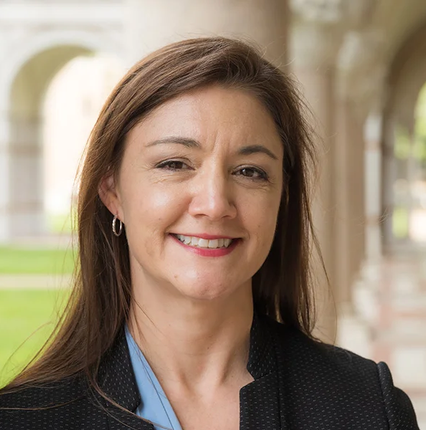
For Mickey Stevenson, Rice University's Assistant Vice President for Research Integrity, research has always been rooted in curiosity. Her academic background in psychology and human development led her first to a faculty career and later to research administration, where she discovered a passion for helping others navigate the complexities of research.
"I've always been interested in figuring out how things work and helping people tell that story through research," she explains.
Mickey’s path to research compliance was not one she initially planned. After serving as a faculty member, she joined the University of Texas System in a role focused on research and technology transfer, helping identify research trends, foster collaboration, and support innovation across UT institutions. She later transitioned into research administration at UT San Antonio, where she gained experience in research ethics, misconduct investigations, responsible conduct of research, and conflict of interest management.
"It brought together a lot of things that fit who I am," she says. "I enjoy helping people. Being able to understand complex regulations and translate them into something useful for researchers is incredibly rewarding."
When Mickey joined Rice in 2023, she was drawn by the university's growing research enterprise and the opportunity to build a dedicated Office of Research Integrity.
Since then, her team has expanded and continued to mature its operations, creating clearer processes, improving service delivery, and strengthening partnerships across campus. Under Mickey’s leadership, the Office of Research Integrity supports key areas including animal welfare, human research participant protection, recombinant DNA and biosafety oversight, conflict of interest and commitment management, research misconduct reviews, and responsible ethical conduct research, helping researchers navigate compliance requirements throughout the research lifecycle.
For colleagues unfamiliar with the office, Mickey offers a simple description of its mission: to enable and support the research of the Rice community.
"We're not here simply to say no," she explains. "We're here to help people figure out how they can do what they need to do while still meeting regulatory requirements."
That philosophy drives everything from educational resources and office hours to improved tools that help faculty, staff, and students understand compliance requirements before issues arise.
One misconception Mickey hopes to change is the belief that compliance offices create barriers to research.
"We should never be something people want to avoid," she says.
Instead, she views compliance as a framework that protects researchers, participants, animals, and the integrity of the research itself. She also emphasizes that compliance concerns are not always the result of intentional misconduct.
"People make mistakes," Mickey notes. "We're not the police. We're more like crossing guards. We're here to help people navigate situations safely and successfully."
When asked what "doing the right thing" looks like in a research environment, her answer is straightforward: don't cut corners, ask questions, and communicate openly.
"Good science depends on communication," she says. "People need to feel empowered to ask questions and challenge assumptions."
Looking ahead, Mickey sees universities navigating an increasingly complex research landscape, with evolving requirements related to conflicts of interest, data security, biosafety, and research oversight. Through it all, she believes a strong culture of integrity begins with individuals who are willing to speak up and seek guidance when something doesn't seem right.
Her message to the Rice community is simple:
"Trust your gut. If something feels off, ask a question. Even when it slows things down, it's worth it."
By encouraging open communication and supporting researchers every step of the way, Mickey and the Office of Research Integrity help ensure that Rice's research remains innovative, ethical, and worthy of the trust placed in it.